

Culture, Religion, and Communication Unit
About the Unit
The Culture, Religion, and Communication Unit (CRC) was originally conceived through a discussion between Professor Valentina Izmirlieva (Columbia Slavic Department) and Dr. Nabila El-Bassel (GHRCCA). In October 2009, GHRCCA interns Grace Zhou and Tanah Spencer met with Professor Izmirlieva to discuss her vision and outline of the unit.
Mission
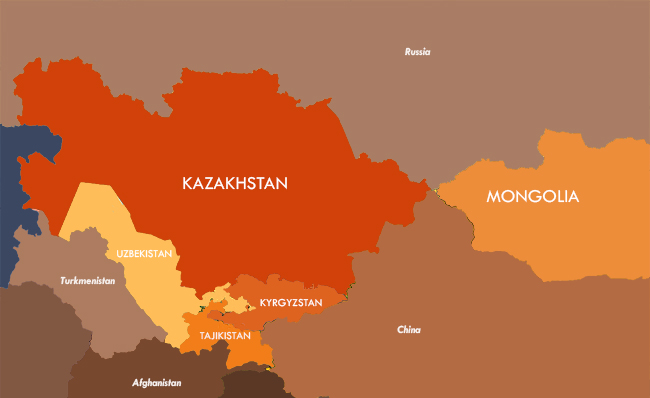
The Culture, Religion, and Communication Unit (CRC) is committed to fostering culturally-specific and culturally-inspired approaches to health-related research in Central Asia. By providing a nexus and framework for the voices of interested individuals, the CRC will develop a cohesive dialogue and exchange about the study, prevention, and treatment of disease in Central Asia. One of the many possibilities of globalization is the opportunity to make the soft skills of the humanities and the particular niche they occupy more applicable to the work of practitioners and social institutions. The CRC will capitalize on the GHRCCA’s bases in New York, Kazakhstan, and other locations in Central Asia to recognize, sustain, and work with the traditional diversity of this region.
Vision
The CRC will pursue the following overarching goals:
1. Re-organize the study of Central Asian cultures, religions and languages to directly improve our research, educational and policy strategies of tackling global challenges, such as HIV/AIDS, drug and human trafficking, substance abuse and sexual violence;
2. Develop culture- and religion-sensitive approaches to the study, prevention and treatment of global diseases in CA and the understanding of the socio-economic, political, legal, and environmental factors related to them;
3. Facilitate a broad-scale cooperation between scholars of culture and religion, social scientists, medical scientists and researchers in the field of public health to address global health hazards most effectively and efficiently;
4. Stimulate a paradigm shift in disease control and prevention efforts by encouraging a long-overdue dialogue of incorporating religion and culture as key variables in the research and teaching practices related to global health; and
5. Facilitate the effective use of GHRCCA’s base in Kazakhstan and New York City (resources that ideally complement each other) to further the work of the diverse community of researchers, faculty, and students.
Leadership & Staff
Director:
Valentina Izmirlieva, Ph.D.
Director of CRC Unit; Director of Graduate Studies of the Slavic Department
vbi1@columbia.edu
Activities
The CRC implemented a series of speaker presentations and a conference in Spring 2011 with the theme for this lecture series and conference “Taboo & Stigma: Perceptions of Health and Disease in Central Asia.” The Center is in the process of planning a Fall 2011 conference in early November. Additional activities envisioned include hosting t brown bag lectures, culture and art series, NGO presentations, Eurasia Colloquiums, as well as an Undergraduate and Graduate Student Symposium. The CRC will also sponsor orientation and training programs for interns and researchers traveling to Central Asia, and strive to create linkages between students, researchers, and scholars of Central Asia in New York, with organizations, projects, or programs in the region. These activities will aid the larger goals of the CRC, which include:
1. Being directly involved in major research projects of the GHRCCA;
2. Fostering individual and collective research projects on religion, culture and communication;
3. Coordinating funding opportunities and fellowships for Columbia’s graduate and undergraduate students;
4. Facilitating internships for our students with local universities in CA and access to field offices in Central Asia and vice versa;
5. Developing a long-term language training program, utilizing the resources of GHRCCA in the region and Columbia University’s resources in New York;
6. Building partnerships with academic institutions in the region and research networks with specialists around the globe;
7. Inviting broad participation from across the University by advancing integration and ensuring the quality of both research and educational activities, eventually involving the publication of a journal;
8. Facilitating contacts with corporations, nonprofit organizations, and governmental and private institutions in search of effective and sustainable solutions to the global health challenges in the region; and
9. Encouraging curriculum that embraces Eurasian studies.